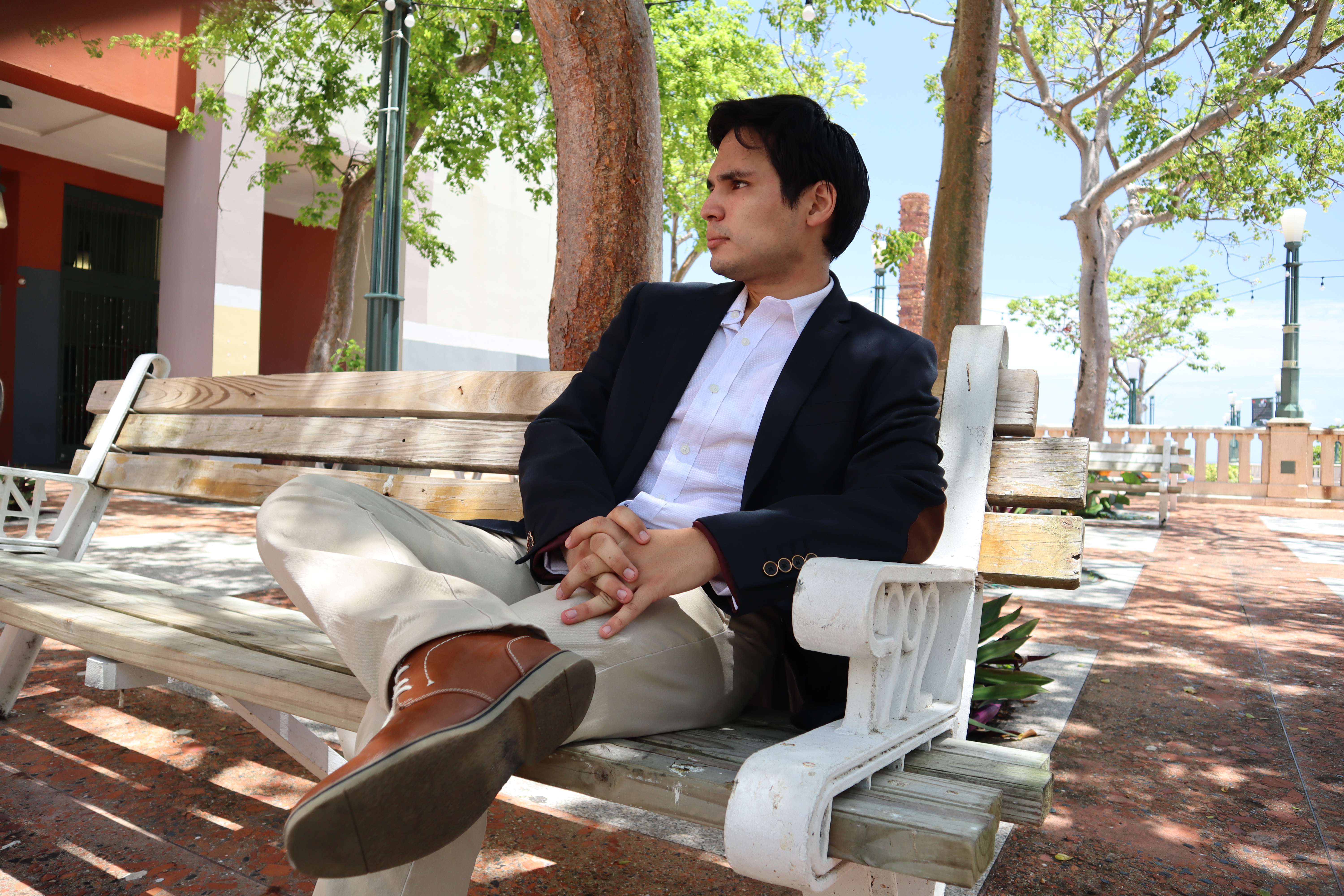
Luis F. Ruiz-Pacheco (Composer)
Composer, Music Arranger
Literary Scenes (For the Peruvian Independence Bicentennial)


The symphonic suite is inspired in three stories taken from the Peruvian literature as representative of the two hundred years of Republican history in the country. It is necessary to mention that all the melodies presented in this suite were created entirely by the composer, even though they are inspired in some traditional folk songs. Likewise, it was composed in 2020 for the Sofia Symphonic Summit 2020, but for reasons of the COVID-19 Pandemic, the premiere had to be postponed until 2022.
Conductor: Luis F. Ruiz-Pacheco (Perú)
World’s Premiere: Sofia Philharmonic Orchestra (Bulgaria)
Sofia Symphonic Summit 2022
Bulgarian National Theater Hall, Bulgaria Hall
July 10th, 2022
Conductor: Enrique Victoria-Obando (Peru)
Performed by Orquesta Sinfónica de Arequipa (Peru)
Place: Teatro Municipal de Arequipa
July 20, 2023
Recording: Alberto Cruz
“Manchay Puito” (from Peruvian Traditions by Ricardo Palma)
Even though this story is located inside the Virreinal period around the 17th century, the Peruvian traditions as a collection of 453 short stories were published in the later half of the 19th Century that are inspired in historical facts or legends from the Inca, Virreinal, Emancipation and the first decades of the Republican period.
“Manchay puito”, literally translated as Terrifying Hell is a story situated in the southeast Peruvian mountains and is about a priest who fell in love with a woman and left aside his sacred vows. Then, they lived a forbidden love. After his beloved woman suddenly died, he disinterred the corpse and started to play the sad song titled as Manchay puito with quena (a cane flute instrument) inside a clay pitcher until he plunged into madness. After that, a plague (probably the Black Death) fell on the town which totally disappeared. It is the reason why, according to the story, the Catholic Church sentenced with excommunication all who play that damned song or plays a flute inside a clay jug and the indigenous people don’t do that in those lands. At the same time Manchay puito is the name of the Inca instrument that consists in a flute made of human bones or cane and played inside a clay jug.
In this score, there are two leitmotifs, the first is presented by the brass section and represents the priest and the second is presented by the flute instrument and represents the beloved woman. She is expressed as a melody which harmony accompaniment played in the bass register gives a clue about the tragedy that will befall everyone who was near to lovers. This piece tries to embody the love between the characters, the death of the beloved woman, the priest’s madness and his damnation to hell.
“Jorge, the People’s Son” (by María Nieves y Bustamante)
This novel was published in the last decade of the 19th century and takes place during the Peruvian civil war of 1856-1858 between opposing leaders Castilla and Vivanco. This war is also known as the Revolution of Arequipa (a city located in south of Perú, known at the same time for being the birthplace of the majority of revolutions in the national history), one of the longest and bloodiest campaigns that ever happened in the country. This novel highlights the force and resistance of the Arequipean people during the revolution against the Government.
In the middle of the war between the marshal Castilla (chief of the Government) and the general Vivanco (supported by Arequipean people), Jorge is a painter who is in love with Elena, an aristocratic woman, but because of his status as an illegitimate son he is not allowed to marry her. Furthermore, Elena believes that she is married to the general Iriarte, an unscrupulous man who fights on Vivanco’s side and celebrates a fake wedding with Elena. Jorge gets involved in a revolution that includes all social strata and harboring conspiracies against his family and friends. Finally, the city falls defeated by Castilla in the battle of Carmen-Alto and Jorge decides to go on with his life after Elena’s death.
In this score, divided into three sections’, the first one shows a “yaraví” (a traditional song about sadness because of unrequited love). The second seeks to recreate the civil war in the city between the military leaders, while it tried to highlight the strength and bravery of the city’s inhabitants. The last shows again the first theme in a less instrumental with the objective of recreating the defeat of the city and traditional characteristic of people.
“Yawar Fiesta” (by José María Arguedas):
This novel was published in 1941 and narrates a story situated around that time. The novel is considered as the top works of the Indigenism, a literary movement that tells the confrontation between the indigenous people (considered as the poorest and weakest strata in the society) and the landowners.
“Yawar fiesta”, literally translated as Celebration of blood is a story located in the southwest Peruvian mountains. Its title is taken from the traditional celebration practiced by the indigenous inhabitants since the virreinal period, each year on July 28th, the anniversary of the Peruvian independence, where the indigenous people disguised as inexperienced bullfighters set off dynamite. At the same time, they accompanied the celebration playing bull horns, traditional folk music and alcoholic drinks with the risk of being murdered by the bull. The story presented in the novel narrates the confrontation between the Government that wants to forbid the celebration which is considered as dangerous and wild and the indigenous inhabitants who want to defend their customs. Faced with that dilemma the Government authorities try to rule the celebration and some landowners hire a Spanish bullfighter who is supposed to fight against Misitu, the terrifying wild bull that lives in the mountain and is considered a divinity. Finally, the Government’s attempt fails and the indigenous people manage to save their tradition.
This score offers an introduction that describes the mountains as a bucolic and peaceful setting. Then, it introduces melodies inspired in traditional folk dances such as “huayno” and includes two leitmotivs: the first, played by trumpets and horns, describes the announcement of the celebration and the last, played by brass section in the bass register, represents the terrifying bull known as Misitu.
 Luis F. Ruiz-Pacheco (Composer)